

Skip to content
Design Ninja

Solution_02 / Custom webshop development

Custom webshops and B2B ordering platforms

For us, a webshop is a business process, not a product catalogue.

A well-run webshop is backed by processes: where the product data comes from, how the price is formed, who can see what, what happens after an order. We map and automate these – from a shop with a few dozen products to a B2B ordering system with thousands – so that the system grows with the business and you don’t have to build a new one in two years.

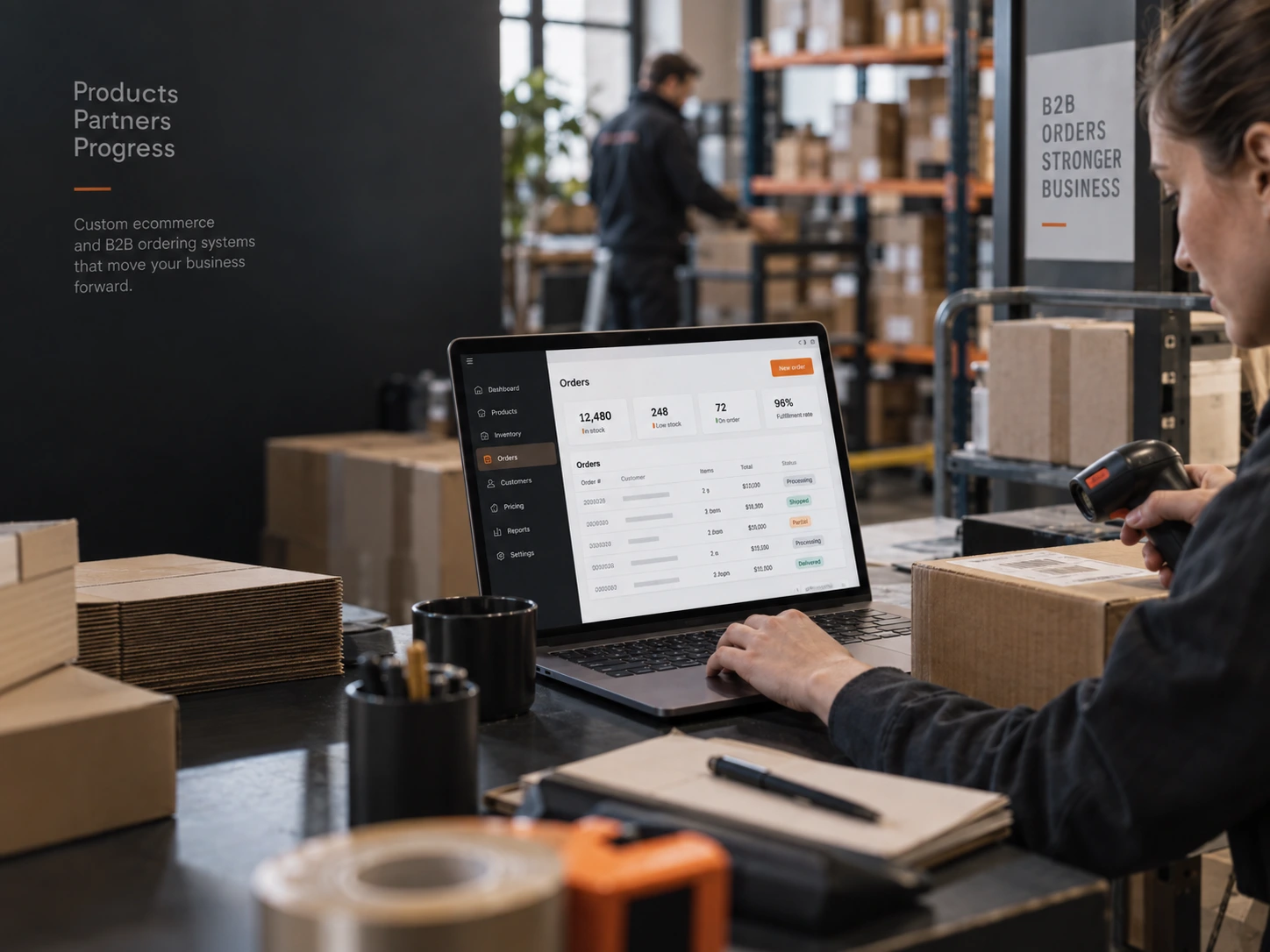
A B2B ordering system in use in a real warehouse environment
  • Process mapping
  • Invoicing integration
  • B2B pricing
  • Stock sync
  • Courier service
  • OSS VAT
  • Coupons and promotions
  • Reports

01 / Who it’s for

Who do we build it for?

  1. 01

    Merchants who have outgrown off-the-shelf solutions

    Custom pricing, special product data or processes that template systems can’t handle – or only with a lot of manual work.

  2. 02

    B2B sellers with a reseller network

    Prices per customer group, framework agreements, repeat orders, net/gross handling – after login, on each partner’s own terms.

  3. 03

    Smaller manufacturers and wholesalers

    Real stock levels in the shop, a link to the invoicing and warehouse software, a reseller interface.

02 / What’s included

The modules the system is built from.

Not every module is needed at once. The first working version includes whatever takes the most load off your shoulders – the rest can be switched on later without a redesign.

  1. 01

    Product and stock management

    Variants, custom attributes, bulk import, stock movements – synced from a spreadsheet, your invoicing software or your warehouse software.

  2. 02

    Pricing and customer groups

    List price, promotions, quantity-based and customer-group-specific prices, custom price lists, coupons – rule-based, with no manual overwriting.

  3. 03

    Checkout and payment

    A simple, fast checkout, card and bank transfer payment and, if needed, integration of instalment and deferred payment providers.

  4. 04

    Invoicing and shipping

    Automatic invoice and proforma invoice issuing, courier labels, parcel points, tracking – no phone calls and no retyping by hand.

  5. 05

    Multiple languages, multiple markets

    Separate prices, VAT and shipping rules per language and country if you ship abroad too; support for EU OSS VAT and consumer protection requirements.

  6. 06

    Reports and marketing

    Sales, cart abandonment and product reports; newsletter, remarketing and price comparison connections; cookie-free visitor analytics.

03 / How we build it

Four phases, with clear outcomes.

Every phase ends with something tangible and a decision – you can see where the project stands and what comes next throughout.

  1. 01

    Process mapping

    Where the product data comes from, how the price is formed, what happens with the order, the invoice and the parcel – as it works today and as you would like it to.

  2. 02

    System design

    Data, connection points, permissions, interface – with extensibility in mind.

  3. 03

    Development and integration

    Module by module, with working parts; invoicing, courier and warehouse connections in a test environment.

  4. 04

    Migration and launch

    Migration of products, customers and order history; parallel running, then switchover and operations.

04 / Typical use cases

What we build it for.

  1. 01

    From WooCommerce to a custom system

    Taking over thousands of products and the order history, with custom pricing and an invoicing integration.

  2. 02

    B2B reseller interface

    After login, customer-specific prices, framework agreement tracking and, if needed, approval before ordering.

  3. 03

    Two shops, one stock

    Separate webshops for several brands, a shared stock, instant sync.

  4. 04

    Configurator-based sales

    Made-to-measure or made-to-spec products with price calculation and a production work order.

05 / Frequently asked questions

What most people ask.

If your processes fit into an off-the-shelf system, we recommend that – and we’ll honestly tell you so during the assessment. A custom system is worth building when your pricing, your links to other software or your ordering process are special, and manual work, errors or limitations already cost you money.

Yes: consumer protection information, right of withdrawal, acceptance of the terms and conditions, invoicing, data handling, EU VAT rules – built into the system, not bolted on afterwards.

Yes, this is the most common integration: an invoice and a courier label are created automatically from the order, and the tracking data is written back into the system.

We take that on for a monthly fee: web hosting, updates, backups, monitoring and a development budget – see our Hosting, operations and infrastructure solution.

References on this topic

We’ve built this before

  • 01 Webshop

    Intim fehérnemű

    New webshop on a custom web engine: over 900 products organized into categories, cart and ordering, GLS and postal delivery. Web design and development.

    Visit site: Intim fehérnemű
  • 02 Webshop

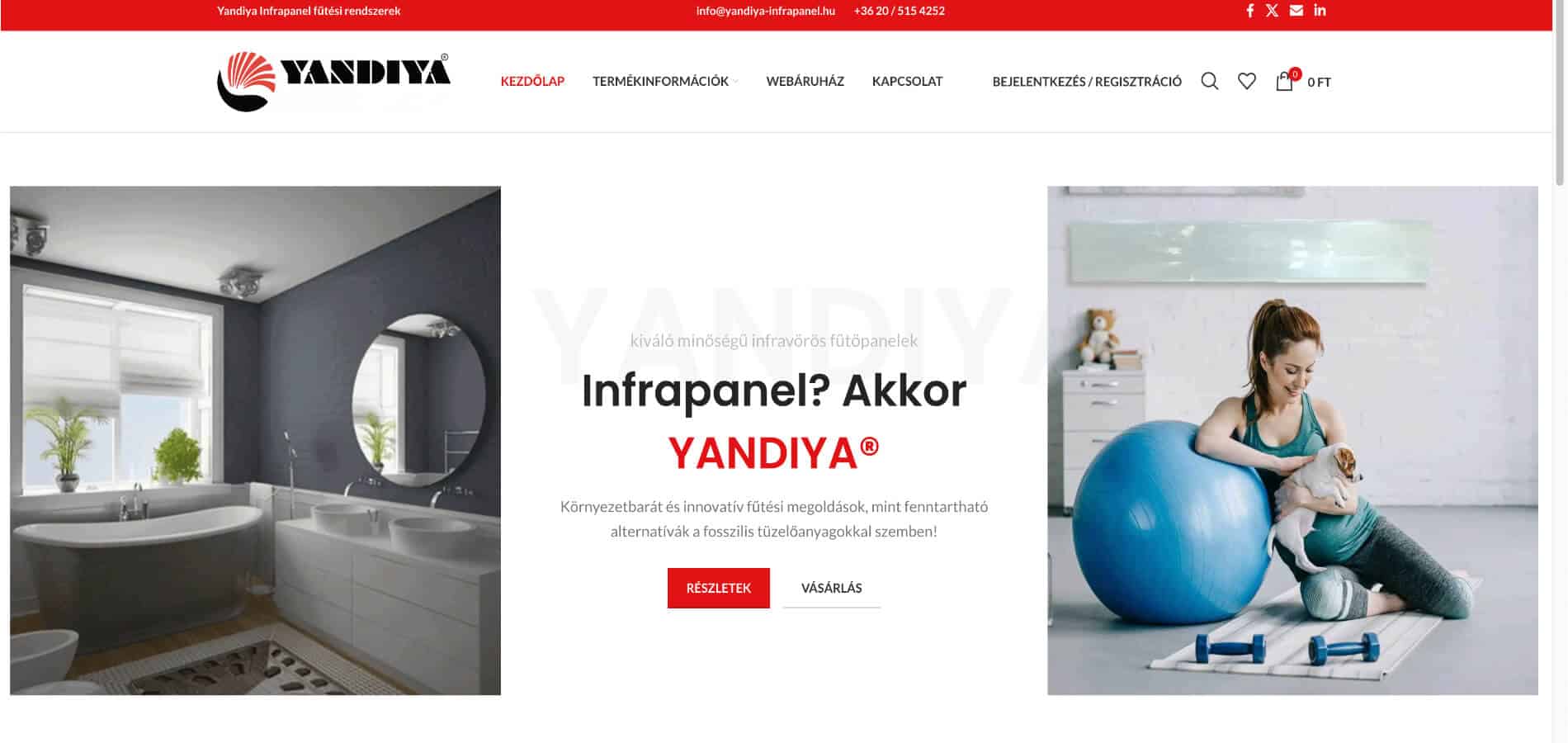
    Yandiya infrapanel

    Complete website and webshop build, web design, mapping of business processes, multilingual setup, hosting and domain services, operation and maintenance.

    Visit site: Yandiya infrapanel
  • 03 Webshop

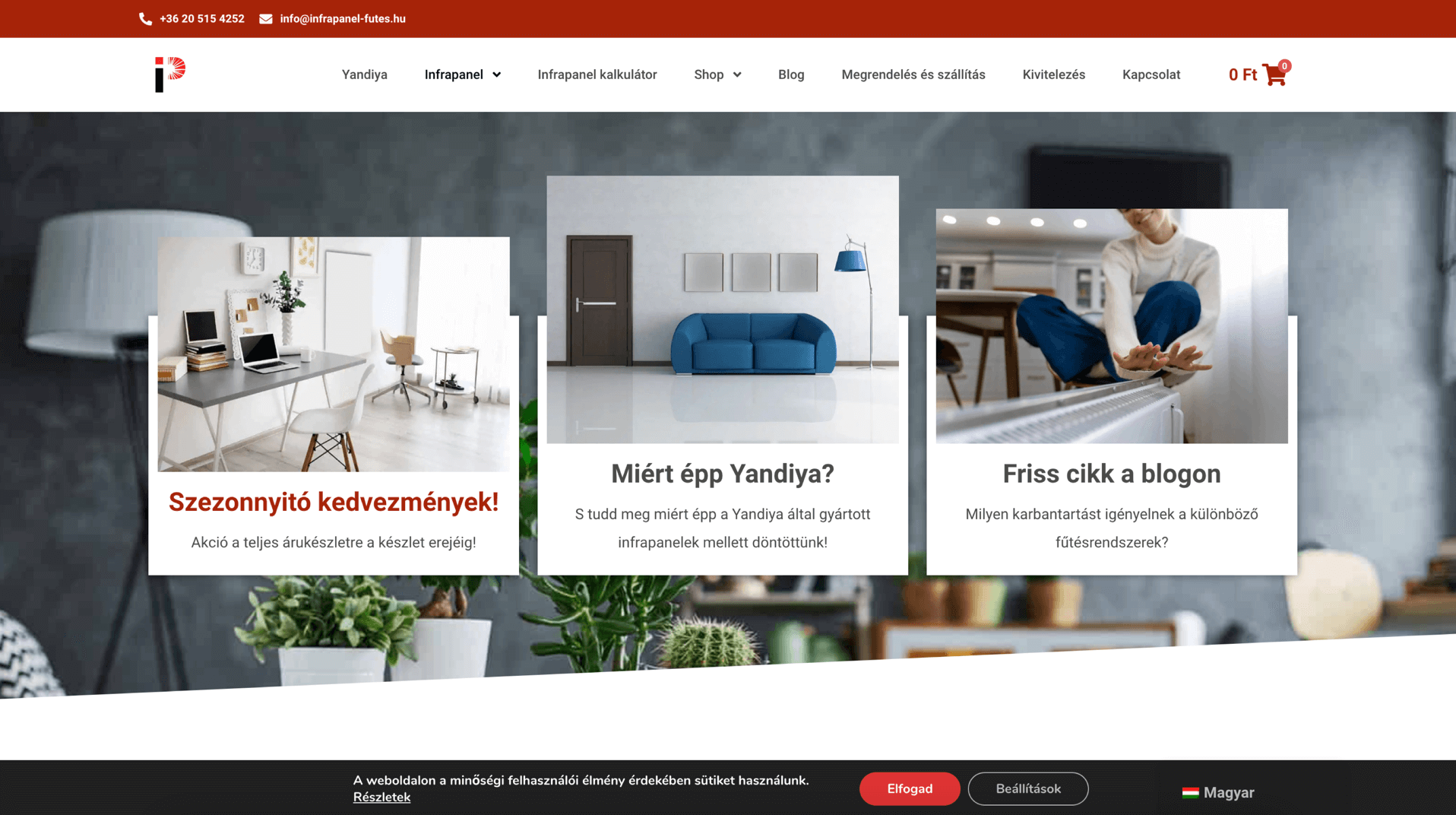
    Infrapanel fűtés

    Complete website and webshop build, web design, mapping of business processes, multilingual setup, hosting and domain services, operation and maintenance.

    Visit site: Infrapanel fűtés

23 more projects on the references page, filterable by type.

All references

Next step

Let’s talk: custom webshops

Briefly describe your business, your current process and your goal. In the first conversation we’ll decide together whether there is a real, achievable opportunity in it – no obligation.

Get in touch

By submitting the form you accept the privacy policy.